If you’ve ever stood in a kitchen aisle and stared at a shelf of G4 bulbs, trying to pick one that doesn’t wash out your fancy wine glass or turn your favorite houseplant’s leaves a sickly yellow, you’ve probably run into that tiny, 3-letter code: CRI. I’m a G4 bulb supplier, and let’s be real — most folks glaze over when I start talking about color rendering index. But here’s the thing: that number isn’t just some random spec sheet jargon. It’s the whole reason your G4 bulbs (you know, the tiny ones under kitchen cabinets, in bathroom mirrors, or in pendant lights over a dining nook) can make a space feel warm, lived-in, or like a sterile doctor’s office. Let’s break this down, no stuffy textbook talk, and tie it to why this matters for anyone shopping for G4 bulbs right now. G4 Bulb
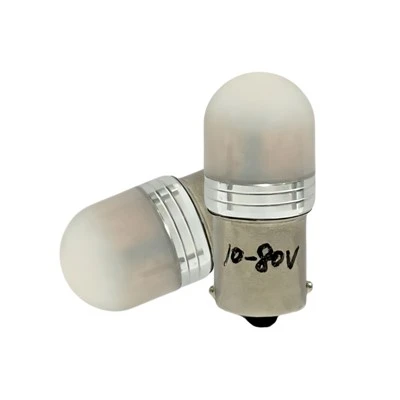
First, let’s keep the basics super simple. CRI stands for Color Rendering Index, and it’s a scale from 0 to 100 that measures how accurately a light source shows the true colors of things compared to natural daylight (which clocks a perfect 100). A low CRI, say 70 or lower? It’s like looking at a photo filtered through a cheap polaroid — all the reds look muted, greens are grayish, and that blue sweater you loved? It’ll look purple under it. A high CRI, like 90+? That’s the stuff that makes a ripe strawberry look juicy, a dark wood dining table look rich, and your kid’s art project look exactly how it does in sunlight.
Now, why does this hit so hard with G4 bulbs specifically? G4s are those mini, bi-pin bulbs — usually 12V, right? They’re not the big 60W Edison bulbs you’d use in a living room. Most people use them in accent lighting: think under-cabinet lights in a kitchen where you prep food, wall sconces in a powder room, or task lighting over a bathroom vanity where you do your makeup. If your G4 has a low CRI, all those daily moments feel off. For example, I’ve had so many customers come back to me saying, “I bought G4s for my bathroom mirror, and when I put on eyeshadow, it’s never the same as at home.” 9 times out of 10, they picked a $1 bulk G4 with a CRI of like 65. That low number turns soft neutral eyeshadows into harsh gray, and makes foundation look like it’s the wrong shade by lunch.
Let’s get a little science here without the boring part. Light is made up of different wavelengths, each corresponding to a color. Natural daylight has a full, balanced spectrum of all these wavelengths — so when you stand in sunlight, every color is represented exactly as it should be. Cheap G4 bulbs, especially the super inexpensive ones for sale at big box stores, often skip some of those wavelengths to cut costs. They might crank up the blue and green to make the bulb look bright on the shelf, but skimp on red and orange. That means when you use that light on a ripe tomato, it’ll look like a pale, pinkish blob instead of the deep, vibrant red it is. For home cooks, that’s a huge deal — if you can’t tell if your chicken is fully cooked under your under-cabinet G4s, that’s not just a vibe issue, that’s a practical problem. On the flip side, high CRI G4 bulbs put that full spectrum back in. A CRI of 95, which is what most of our best-selling G4s have, means you’re getting that balanced light — the same as what a professional photographer uses for product shots, if you’re selling anything from homemade candles to jewelry.
Wait, but what about the difference between CRI 80 and CRI 90? I get why people might think “higher is just better” but let’s be real — not every space needs a 95 CRI. CRI 80 is totally fine for a closet where you just need to find a shirt, right? No one’s checking the color of their dress there. But for accent lighting, task lighting, or any space where people spend more than a quick minute, 80 is the minimum I’d ever recommend. I’ve seen customers who tried 70 CRI G4s for their kitchen and ended up redoing all the bulbs because even the wall color looked wrong — their warm off-white walls looked like a cold, gray paint instead.
Another thing people sleep on: R9. That’s a sub-index of CRI that measures how well a light renders deep reds. The main CRI number you see on a spec sheet is an average of 8 colors, but R9 is the one that makes those rich reds, like a pomegranate or a brick fireplace, pop. A lot of cheap G4s have an R9 of 0, which means they can’t show any deep red at all. So if you have a set of red wine glasses on your dining table under G4s, they’ll look clear or pink instead of that deep, bold red they actually are. Our G4s have an R9 of at least 50, which makes those little details matter without breaking the bank.
Let’s talk about real life examples, because that’s what this is all about. A customer of mine who runs a small café in Portland hit me up last year. She had installed cheap G4s over her pastry display case, and customers kept saying her croissants looked stale even when they were fresh. We swapped out her 65 CRI G4s for our 92 CRI ones, and within a week, she said people were commenting that the pastries looked so much fresher, like they were right out of the oven. It wasn’t that we changed the brightness — we kept the same 10W G4s — it was that the CRI made the golden brown of the croissants look warm and rich, not dull and gray. That’s the power of it.
What about energy efficiency? A lot of people think, “If CRI is high, the bulb uses more power.” That was true 10 years ago with old fluorescent G4s, but not with the modern LED G4s we make now. Our high CRI G4s use the exact same 12V power, last up to 25,000 hours, and use way less energy than the incandescent G4s they replace. The CRI doesn’t affect energy usage anymore — that’s a myth leftover from the old bulb days.
Now, why does this matter when you’re buying from a G4 supplier? Not all suppliers prioritize CRI. Some cut corners to make a cheaper bulb, and that’s fine if you just need a bulb for a closet. But if you’re buying for a space where light is part of the experience — a home, a small business, a rental property where you want to add value — you need to work with a supplier who actually tests their CRI. We test every batch of our G4s in our in-house lab, not just rely on the manufacturer’s spec sheet. That means you’re not getting a bulb that says “CRI 90” on the box but actually tests out to 82. I’ve had customers come to me after buying from other suppliers, saying their bulbs’ actual CRI was way lower than advertised, so we make sure ours are accurate.
Let’s also clear up a common confusion: CRI vs. color temperature. Color temperature is the warm or cool tone of the light — like 2700K is warm, 5000K is cool. CRI is totally separate. You can have a warm light (2700K) with a high CRI, or a warm light with a low CRI. A lot of people mix these up, but CRI is all about color accuracy, not how yellow or blue the light is. That’s why two bulbs can both be 2700K, but one will make your walls look warm and the other will make them look gray — the CRI difference.
I get it, shopping for G4 bulbs can feel overwhelming. There are so many options, from random brands on Amazon to big box store brands, and everyone says their bulbs are the best. But when you’re looking at CRI, don’t just glance at the number — look at what it means for your space. If you’re replacing a G4 in a bathroom, where you need to see your makeup clearly, go for at least 85 CRI. If it’s a dining nook where you want the table and food to look great, 90+ is worth it. If it’s a storage closet, 70 is fine — no judgment, we all need cheap bulbs for those hard-to-reach spaces.
Another point: long-term use. Low CRI bulbs fade faster in a way that’s not obvious at first. Over time, that missing red wavelength will break down a little more, so your space will look worse and worse as the bulb ages. High CRI G4s, because they have a full spectrum, stay consistent for years. Our customers tell us they install our G4s in their kitchen cabinets and forget about them for 3-4 years, and the light still looks the same as the day they put them in.
I’ve been supplying G4 bulbs for 7 years now, and the number one mistake people make is picking the cheapest bulb without checking CRI. They think it’s just a tiny bulb, so it doesn’t matter, but that tiny bulb is the first thing you see when you walk into a kitchen or a bathroom. It’s the light that illuminates your morning coffee, your kids’ homework, your dinner with friends. If it looks off, that whole space feels off.
So, what should you look for when choosing G4 bulbs? First, check the CRI — aim for 80 minimum, 85+ for any space you spend time in or use for tasks. Second, check R9 if you care about deep reds (wine, food, decor), look for 50 or higher. Third, buy from a supplier who stands behind their specs. We offer a 1-year warranty on all our G4s, so if you get a bulb that doesn’t meet the CRI advertised, we’ll replace it no questions asked.
If you’re shopping for G4 bulbs right now — whether you’re a homeowner doing a renovation, a small business owner updating your café, or a contractor sourcing bulbs for rental properties — don’t sleep on the CRI. It’s not a marketing buzzword. It’s the difference between a space that feels like home and one that feels functional at best.
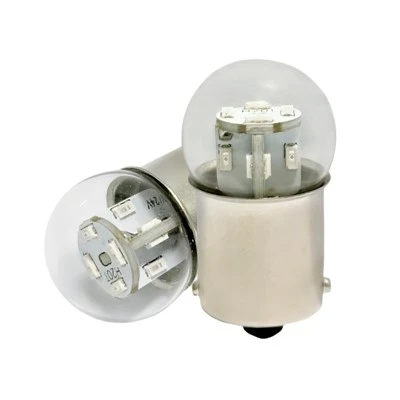
If you want to chat about which G4 bulbs are right for your space, ask about sample bulbs, or just get more info on our CRI-tested G4s, feel free to reach out. We’re here to help you pick the right bulb, not just the cheapest one.
E27 Bulb References
- International Electrotechnical Commission (IEC). "IEC 62717:2019 – LED modules for general lighting – Performance requirements."
- Davis, W., & Ohno, Y. (2005). "Color Rendering of White Light Sources: A Review of CRI and New Metrics." Journal of the Illuminating Engineering Society.
- American National Standards Institute (ANSI). "ANSI C78.377-2020 – Specification for the Performance of Solid-State Lighting Products."
- National Lighting Product Information Program (NLPIP). "Color Rendering: What It Means for Lighting Choices." Lighting Research Center, Rensselaer Polytechnic Institute.
BULBPLAN Co., Ltd.
As one of the most professional g4 bulb manufacturers and suppliers in China, our products have good reputation in the market. Please feel free to wholesale cheap g4 bulb for sale here and get pricelist from our factory. Quality products and reasonable price are available.
Address: No. 86 Zhongli Road, Nancheng Street, Dongguan City, Guangdong Province
E-mail: Alex@bulbplan.com
WebSite: https://www.nicebulbs.com/
