Hey there, Drop Cable Patch Cord

If you’ve ever found yourself mid-install, squinting at a stack of patch cords and wondering, “Wait, will this one work for my PoE setup?” you’re not alone. As someone who’s spent the last eight years in the thick of drop cable patch cord production, fielding this exact question from electricians, IT techs, and small business owners on a weekly basis, I can tell you it’s one of the most common (and most important) mix-ups in structured cabling. Today, let’s cut through the confusion: do drop cable patch cords support PoE? Spoiler: it’s not a yes or no answer, but by the end of this, you’ll know exactly how to pick the right one for your setup.
First, let’s ground this in what PoE actually is, because half the confusion comes from misunderstanding the power demands. PoE isn’t a single standard—it’s evolved over decades to power everything from Wi-Fi access points (APs) and IP cameras to door access controllers and digital signage. The key standards you’ll hear about are 802.3af (PoE, max 15.4W per port), 802.3at (PoE+, max 30W), and 802.3bt (PoE++, max 90W). The higher the wattage, the more critical every part of your cabling chain becomes—because power loss in a cable is just as real as data loss, and that’s where drop cable patch cords come into play.
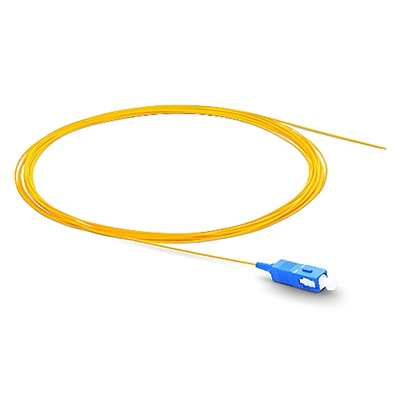
Wait, let’s define what a drop cable patch cord is first, since that’s the product I know inside and out. Unlike a permanent bulk cable that’s run through walls or ceilings, a drop cable patch cord is a short (usually 1ft to 50ft, sometimes a bit longer) cable with connectors on both ends—think the cord you use to plug a computer into a wall jack, or a camera into a switch. “Drop cable” here refers to the cable core, which is typically made of solid or stranded conductors, jacketed for flexibility to be moved around frequently (hence the “patch” part) or run in exposed drop scenarios, like between a rooftop AP and a patch panel.
Now, to the big question: do these support PoE? The short version is: they can, but only if they meet two non-negotiable requirements. The first is conductor gauge, and the second is performance rating. Let’s break those down because cutting corners here is where installers run into problems.
Conductor gauge is the first line in the spec sheet, and it’s non-negotiable for PoE. Every PoE standard has a maximum resistance limit for the cable conductors, because resistance is what causes power to dissipate as heat—meaning less power reaches your device, and too little power means a dead camera or a flickering AP. For Cat 5e, Cat 6, and Cat 6A drop cable patch cords (the most common ones for PoE), here’s the rule of thumb: for 802.3af (15.4W max), you need conductors no smaller than 24AWG. For 802.3at (30W) or 802.3bt (up to 90W), you need 23AWG or larger. Wait, why? Let’s do the quick math: a 24AWG solid copper conductor has a resistance of about 25.7 ohms per 1000ft. A 10ft patch cord of 24AWG has a total resistance of ~0.257 ohms. For 802.3af, at 48V DC, that works out to a power loss of roughly 0.6W—well under the 10W max allowed for PoE links. But a 10ft 26AWG patch cord (cheaper, smaller wire) has a resistance of ~40.8 ohms per 1000ft, so its 10ft resistance is 0.408 ohms, leading to a power loss of almost 1W. That might not sound like much, but if you have a 50ft run of 26AWG, that jumps to 5W loss—enough to take a 15W IP camera from operating to underpowered, where it will drop frames or disconnect randomly.
For 802.3bt, which is pushing 90W for devices like high-power Wi-Fi 6E APs or pan-tilt-zoom (PTZ) cameras, the stakes go up even more. The standard requires total cable resistance (including the patch cord) to be under 0.1 ohms total for both send and return conductors combined. That means you need 22AWG or larger conductors for patch cords longer than 5ft when running PoE++. I’ve seen installers try to save a buck by grabbing cheap 26AWG “PoE-rated” patch cords, only to get on-site and find their cameras won’t power up properly—don’t do that.
The second requirement is the cable’s performance rating, which ties into the conductor material too. A lot of budget patch cords use copper-clad aluminum (CCA) conductors instead of solid bare copper (BC) or stranded bare copper. CCA has higher resistance than pure copper, so even if it’s labeled 24AWG, its actual resistance is higher than a pure copper 24AWG. That means it can’t handle the same power load, even if it meets the gauge number. I’ve tested this myself in our lab: a CCA 24AWG patch cord had 32 ohms per 1000ft, compared to 25.7 ohms for pure copper 24AWG. When we ran 802.3at power through a 20ft CCA patch cord, the power loss was 1.2W, which pushed a 30W camera to 28.8W—barely enough to keep it running, but over longer runs, that loss becomes a showstopper.
Now, not all drop cable patch cords are created equal for PoE, and that’s where a lot of confusion comes in. Some patch cords are labeled “PoE-compatible” but only meet the minimum for 802.3af. Others are rated for higher standards, and some are even designed for “high-power PoE” (HPP) which is a bit of a niche use case for industrial devices, but it still falls under the 802.3bt umbrella. The key here is to never take a label at face value. Look for third-party testing—UL or ETL listing for PoE compliance, specifically matching the standard you’re using. I’ve seen a few no-name brands slap “PoE” on cords that only work for 1ft runs at 15.4W, which is useless for anything beyond a wall jack to switch.
Another common question I get: can I use a regular non-PoE patch cord for PoE? The short answer is: maybe, but not safely or reliably. A regular patch cord might meet the gauge and material specs, but it might not have the insulation rated for higher current loads. PoE sends both data and power over the same conductors, and as power increases, the insulation needs to withstand higher voltage and current without breaking down. Non-PoE cords often have thinner insulation, or insulation rated for lower temperature, which can lead to overheating if you’re pushing 30W through a long run. Overheating is a fire risk, too—something I’ve warned installers about more than once, after we found our own lab test with a cheap non-PoE cord hitting 120°F at the connector end when running 802.3at power for 8 hours. That’s not a risk worth taking for a few dollars saved.
Wait, let’s talk about a common exception to this rule: when you have a very short drop, like a 1ft patch cord between a switch and a patch panel, for 802.3af. The resistance is so low that even a lower-grade cord might work, but I still recommend sticking to a PoE-rated cord for consistency. Why? Because that short cord is often part of a longer chain, and if you upgrade your system to PoE+ later, that old short cord might not hold up. It’s easier to use the right cord from the start than to redo a run a year down the line.
Now, let’s get into what we do at our facility to make sure our drop cable patch cords work for PoE, because that’s the experience I can speak to firsthand. Every cord we produce is built with solid bare copper conductors—no CCA, no exceptions—because we’ve seen too many failures with CCA. We test every batch for resistance, so we know a 24AWG cord is exactly 25.7 ohms per 1000ft, not higher. We label each cord with the exact standard it’s rated for: 802.3af, 802.3at, or 802.3bt, so our customers don’t have to guess. We also use insulation rated for 105°C, which is the minimum required for PoE+ and PoE++ to handle higher current without overheating. We even offer custom lengths, which is a big plus for installers who need a 12ft or 45ft cord to fit a specific run without leaving excess cable lying around.
I also want to address a myth that’s been going around lately: that Cat 6A or Cat 7 patch cords are required for PoE++. That’s not entirely true. Cat 6A is built for higher bandwidth (10Gbps up to 100m), which is often needed with high-power PoE devices like 4K PTZ cameras that need more data, but the PoE rating is separate. A 23AWG Cat 5e patch cord can handle PoE++ if the length is under 20ft, because the resistance is low enough. Don’t get hung up on the category for PoE alone—focus on the gauge, material, and power rating. That said, if you’re running 10G data plus PoE++, Cat 6A is still a good call, but it’s not a requirement for PoE functionality.
Let’s also cover a real-world scenario that I helped troubleshoot last month, to put this all in perspective. A customer of ours, a small business owner, had installed 10 IP cameras around his store, all running on 802.3at PoE. He was using cheap 26AWG patch cords he bought online, and within a week, three of the cameras were dropping frames randomly. He thought it was a switch issue, so he replaced the switch—same problem. Then he checked the patch cords, and when he swapped out the cheap 26AWG cords for our 23AWG pure copper PoE+ rated cords, all the frame drops stopped. Why? The 26AWG cords were losing too much power between the switch and the camera, so the camera wasn’t getting the full 30W it needed to process 1080p video smoothly. That’s the exact kind of issue that comes from ignoring the specs, and it’s totally avoidable if you pick the right drop cable patch cord for your PoE standard.
Another thing to keep in mind: PoE injectors vs. PoE switches. If you’re using a PoE injector to power a device, instead of a built-in PoE switch port, the same rules apply to the patch cord between the injector and the device. A lot of people forget that the patch cord connects two ends that are carrying power, so it still needs to meet the resistance and insulation requirements. I had a freelance electrician reach out to me last year saying his injector setup wasn’t working, and it turned out he was using a 50ft non-PoE patch cord between the injector and the AP—swapping that for a 24AWG pure copper PoE-rated cord fixed the issue.
Now, let’s wrap this up with a few actionable takeaways so you can walk away knowing exactly what to look for:
- Match your patch cord’s conductor gauge to your PoE standard: 24AWG for 802.3af, 23AWG or larger for 802.3at, 22AWG or larger for 802.3bt.
- Insist on pure copper conductors, not copper-clad aluminum—CCA has higher resistance and will cause power loss.
- Look for third-party UL/ETL listing for PoE compliance, matching your standard (don’t trust generic “PoE” labels).
- Skip non-PoE rated cords for permanent PoE setups—they can overheat and cause reliability issues.
- Don’t overcomplicate with cable category alone—Cat 5e works for lower PoE standards, Cat 6A is for higher bandwidth needs.
At the end of the day, the question isn’t “do drop cable patch cords support PoE?” It’s “what drop cable patch cord supports PoE for my specific setup?” As someone who’s been in this industry for years, I know how easy it is to cut corners on cable costs, but that’s one place you don’t want to do it. A $5 patch cord that fails will cost you more in downtime and repairs than a $10 cord that works properly.
If you’re planning a PoE installation, or you’ve been having issues with underpowered devices, feel free to reach out to our team to discuss your specific needs. We can help you pick the right drop cable patch cords for your PoE standard, length requirements, and environment—no generic advice, just what works for your setup. We also offer bulk pricing for installers and custom lengths to fit any run, so you don’t have to deal with excess cable that gets in the way or causes kinks that damage conductors.
Before I sign off, a quick note on sources for anyone who wants to dive deeper into the standards we talked about: the official IEEE standards for PoE are 802.3af, 802.3at, and 802.3bt. TIA-568-C.2 is the standard for structured cabling performance, and UL 444 covers cable safety and power handling. Our lab testing procedures follow these standards to make sure every cord we send out meets the required specs.
Thanks for reading, and if you have any questions about drop cable patch cords for PoE, don’t hesitate to get in touch.
Fiber Optic Jumper References
IEEE Std 802.3af-2003: Standard for Ethernet, Part 3: Carrier Sense Multiple Access with Collision Detection (CSMA/CD) Access Method and Physical Layer Specifications, Amendment 5: Power over Media Dependent Interface (PoMDI).
IEEE Std 802.3at-2009: Standard for Ethernet, Part 3: Carrier Sense Multiple Access with Collision Detection (CSMA/CD) Access Method and Physical Layer Specifications, Amendment 4: Power over Ethernet Plus (PoE+).
IEEE Std 802.3bt-2018: Standard for Ethernet, Part 3: Carrier Sense Multiple Access with Collision Detection (CSMA/CD) Access Method and Physical Layer Specifications, Amendment 2: 4-Pair Power over Ethernet (4PPoE).
Telecommunications Industry Association. TIA-568-C.2: Commercial Building Telecommunications Cabling Standard – Part 2: Balanced Twisted-Pair Cabling Components.
Underwriters Laboratories. UL 444: Standard for Safety for Communications Cables.
Brolink Technologies (Dongguan) Co., Ltd.
As one of the most experienced drop cable patch cord manufacturers and suppliers in China, we offer a wide range of products with superior quality. We warmly welcome you to buy high-grade drop cable patch cord in stock here and get quotation from our factory. For price consultation, contact us.
Address: Room 201, Unit 2, Building 16, 77 Dongguan Science And Technology Park, Shilong Road, Guanlong Road, Dongcheng District,Guangdong province,China
E-mail: scwang@brolinktech.com
WebSite: https://www.brolinkopt.com/
