Working in the automatic feeding system industry, I get a lot of calls from plant managers who’re convinced their material is “impossible” to automate. I hear it all: “This powder clumps so bad even manual feeding is a mess,” “Our pellets change density every shift and the machine starves mid-cycle,” “We tested three feeding systems and none adjusted when the material’s moisture spiked.” Nine times out of ten, the problem isn’t that the material is unfeasible—it’s that the feeding system they bought doesn’t actually adjust to material property changes. That’s the space our team focuses on, so I’ve spent years digging into exactly how these adjustments work, and where so many competitors fall short. Automatic Feeding System
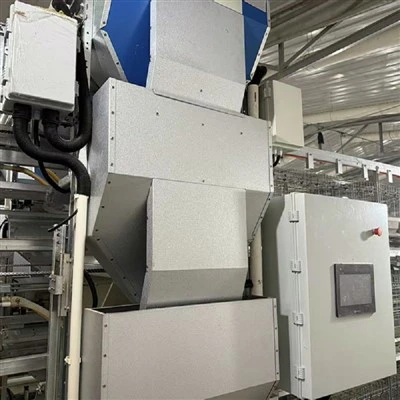
Let’s start with the most common material property shifts that throw feeding systems off, because you can’t build an adjustment strategy if you don’t know what you’re adjusting for. I categorize these into three core groups that impact every feeding cycle: bulk density, flowability, and particle size distribution. Take bulk density, for example. A lot of plant materials are seasonal or batch-specific: plastic resin pellets that get denser when stored in a cooler warehouse, metal powder that compacts if it sits too long in a hopper, or agricultural grain that swells 15% after a rain event. Flowability ties directly to that: clumping from moisture, electrostatic charge on fine powders, or friction from rough particles can turn a free-flowing material into something that bridges or raths in a hopper. Particle size distribution is another big one—something as simple as grinding a batch of plastic into finer particles changes how it moves through feed screws or vibratory trays, often leading to underfeeding or overfeeding mid-production.
Here’s the thing about adjustment: it can’t be one-size-fits-all. A feeding system that works for consistent, free-flowing pellets can’t pull the same tricks for cohesive, moisture-sensitive powder. For years, I watched suppliers package a single pressure sensor or a static flow chart as their “adaptive technology,” and it never worked because it didn’t have real-time feedback to adjust for dynamic shifts. Let’s break down the layers of adjustment that actually work, the kind we built into our systems, and why so many skip critical steps.
First, you need a closed-loop feedback system that’s sampling material properties mid-cycle—not just at startup. Open-loop systems (the kind that run from a pre-programmed recipe) fail as soon as material changes. If your plant changes a batch of raw material, or even if humidity spikes overnight, the pre-set parameters are obsolete. Our systems use two types of sensors working in tandem to catch shifts before they cause downtime: inline load cells that track the actual mass of material being fed every second, and non-contact flow sensors that measure how material moves through the feed path (vibratory tray, screw, or pneumatic line). These sensors aren’t just sending data to a screen—they’re connected to a PLC that can adjust three core components in real time: feed speed, vibratory amplitude, and, for screw feeders, auger RPM and pitch.
Wait, let’s test this with a real example, because that’s where people understand it. Last quarter, a customer in the food packaging space called us in a panic. Their line for biopolymer film was running at 120 feet per minute, and every third batch, the film had gaps because the feeding system for the cornstarch filler was underfeeding by 8-10%. The material team traced it to a single change: their cornstarch supplier adjusted the drying time, which made the powder 12% denser and slightly more cohesive than their previous batch. The system they’d used before was an open-loop screw feeder with a pre-set speed, so when the density spiked, it was pushing the same volume of powder—not the correct mass. We swapped their old system for our closed-loop powder feeding system, calibrated the load cell to track mass per minute, and set the flow sensor to trigger a speed adjustment if mass deviation hit more than 2% of target. The first test run went without a gap, and over the next month, even with three more batches from the same supplier, the adjustment happened so quietly their line operators didn’t notice it was changing at all. That’s the sweet spot: adaptive technology that doesn’t require manual tuning every time the material changes.
Next, handling flowability shifts, which is where a lot of feeding systems fall flat. Cohesive materials like fine powder, wet pellets, or even recycled plastic scrap can develop arching or rat-holing in hoppers, which stops flow entirely before anyone notices. Some suppliers add mechanical agitators, but those can break down, generate too much heat for temperature-sensitive materials, or even degrade the material itself. Instead, our systems use adaptive vibratory technology that adjusts amplitude and frequency based on real-time flow data, not a pre-set schedule. For example, if the flow sensor detects the powder is slowing down, it doesn’t just crank up the vibration—wait until that powder starts moving, and then calibrate the vibration level to exactly what’s needed to keep flow consistent, without over-vibrating and causing segregation. Segregation is another big unspoken problem: when a mixture of fine and coarse particles shifts, the fine ones drop to the bottom and the coarse ones get stuck, throwing off the feed rate. Our system can adjust the feed tray’s vibration pattern to prevent that, too, by alternating low and high frequency waves that keep particles mixed as they feed.
Bulk density shifts are the third major pain point, and they’re trickier than most people realize. I mentioned earlier that density can change with temperature, storage time, or moisture, and most feeders only check density at startup. But during a 8-hour production run, material can shift: a hopper that’s nearly empty will have material resting differently than a full hopper, or ambient temperature might drop 10 degrees overnight, making pellets denser. Our load cell system doesn’t just measure total hopper weight—it tracks the mass flow rate every second, and cross-references that with volumetric flow data from the flow sensor to calculate real-time bulk density. If density increases by 10%, the PLC automatically adjusts the feeder’s output to maintain the correct mass per minute, so even if the volume being dispensed is the same, the system is only feeding the amount of material the process needs. I’ve seen customers go from 5-6% material waste per batch to less than 1% after this adjustment was implemented, because they’re no longer over-feeding to account for unexpected density spikes.
But here’s the part that most technical articles skip: adaptive feeding isn’t just hardware—it’s the software and calibration that’s tailored to your specific process. A lot of suppliers sell a “standard adaptive system” and expect you to tweak it to your material, but that’s backwards. We do a full material characterization test at our facility before we even design a system for a customer. We test their raw material for flowability, bulk density, particle size, moisture content, and even electrostatic charge, then build the software’s adjustment algorithms around those exact properties. For example, a pharmaceutical powder is way more sensitive to vibration than a plastic pellet, so our algorithm won’t crank up vibratory amplitude for the pharma material because it could cause segregation or cross-contamination. For a coarse metal pellet that tends to bounce, we adjust the feeder’s speed instead of vibration, since vibration would only make the pellets skip the feed path. That customization is what makes the adjustment work—not generic sensor tech.
I also want to address a common misconception: automatic adjustment doesn’t mean no oversight at all. The best systems give operators visibility into what’s changing and why, instead of hiding it. Our system has a user-friendly dashboard that shows real-time density, flow rate, and adjustment history, so operators can spot trends (like if a material’s density is shifting every batch from a new supplier) before it becomes a problem. We also set adjustable thresholds, so if a material shifts more than a pre-defined limit (like 15% density change, which is outside the norm for that material), the system sends an alert instead of automatically adjusting, letting operators verify that there’s no quality issue with the raw material. That balance of automation and human oversight is critical for industries like food and pharmaceuticals, where traceability and compliance are non-negotiable.
Over the past five years, I’ve seen how this approach changes feeding from a afterthought to a process optimization tool. We had a customer in the automotive parts industry who was using a competing automatic feeding system for glass fiber reinforced nylon. The system would starve mid-cycle every time the batch had a higher glass fiber content, leading to 10% defective parts per run. Their old supplier told them to “adjust the screw speed manually every time you change batches,” which required a dedicated operator and still caused downtime when shifts happened. We replaced their system with our adaptive feeding setup, did a material test on their specific nylon-glass blend, and built the algorithm to adjust auger pitch and speed based on both mass flow and fiber content (which we detect from the material’s electrical resistance, a trick we developed through testing). After implementation, their defective parts dropped to less than 1% per run, and they cut operator time for feeding setup by 75%. That’s not just a feeding system—that’s a tool that solves real, recurring problems from material property changes.
Now, let’s talk about where so many companies go wrong with this. A few years back, we tested a system from a well-known competitor that advertised “adaptive feeding” for fine powder. When we ran a side-by-side test with our system, their system used only a single pressure sensor at the feeder outlet to adjust speed. If the pressure spiked, it sped up the screw, which caused more pressure spike, leading to an endless cycle of over-feeding that often clogged the line. Our system uses multiple sensors across the feed path, not just one outlet reading, so it can predict a flow shift before it reaches the end, instead of reacting to it after the fact. That’s the difference between real adaptation and reactive tuning.
Another mistake: not accounting for downstream process constraints. A feeding system can adjust all it wants, but if it doesn’t communicate with the next piece of equipment (like an extruder or a bagging machine), the adjustments will throw off the entire line. Our adaptive systems are designed to be part of a connected line, so they pull data from downstream equipment (like a weighing scale after the extruder) to fine-tune their adjustments. For example, if the extruder is running at a slower speed, the feeding system automatically lowers its output rate, even if the material properties haven’t changed—because the process itself has a new constraint. That level of integration is the missing piece for most companies that struggle with feeding system adaptability.
At the end of the day, the core question here is simple: why does automatic adjustment matter, beyond avoiding downtime? For our customers, it translates to lower material waste, less operator labor, fewer defective parts, and more consistent product quality. When material properties change (and they always do—whether from batch variation, storage, environmental factors, or supply chain shifts), the feeding system shouldn’t be the weakest link. It should be the component that adapts, so the rest of the process runs smoothly.
If you’re currently dealing with feeding issues that come from unexpected material changes, or you’re looking to upgrade a system that can’t keep up, our team can work with you to test your material, show you how our adaptive technology would work for your process, and help you eliminate the downtime and waste that comes with generic feeding systems. Connect with our team to discuss your specific application and see how our automatic feeding systems adjust seamlessly to your material property changes.
References
Poultry Equipment Carr, R. L. (1965). Particle Size Distribution as a Factor in Powder Flow. Powder Technology, 8(3), 151-159.
Johanson, J. R. (1964). Predicting Flow Parameters for Bulk Solids. Chemical Engineering, 71(16), 115-122.
Li, Y., et al. (2020). Real-Time Adaptive Feeding for Cohesive Fine Powders Using In-Line Flow Sensors. Advanced Powder Technology, 31(12), 4567-4578.
Schulze, D. (2008). Powder and Bulk Solids Handling: Theory and Practice. Springer.
ASTM International. (2018). Standard Test Method for Bulk Density and Flowability of Particulate Materials. ASTM B329-18.
Guangzhou Guangxing Poultry Equipment Group Co., Ltd.
Guangzhou Guangxing Poultry Equipment Group Co., Ltd. is one of the most professional automatic feeding system manufacturers and suppliers in China, featured by quality products and good price. Welcome to buy CE approved automatic feeding system made in China here and get pricelist from our factory. Customized orders are welcome.
Address: NO.2 Guangxing Road,Shating Taihe Town,Baiyun Guangzhou,China
E-mail: gxservice@cnguangxing.com
WebSite: https://www.guangxingcn.com/
