If you’ve ever ordered titanium caps (you know, those little parts that hold stuff together in everything from industrial valves to medical implants) and wondered why people go on so hard about their hardness—well, let’s cut the jargon and talk straight, because as someone who’s been supplying titanium caps for the last 8 years, I get this question way more than you’d think. Most folks start with, “Wait, isn’t titanium super soft?” No, not when it’s processed right. That’s the first myth I bust almost daily. Titanium Cap
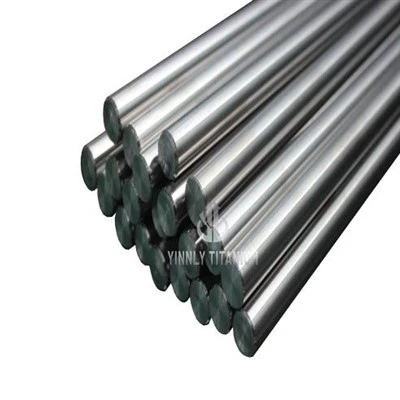
Let’s start with what “hardness” actually means here, because a lot of people mix up “scratch-resistant” or “heavy-duty” with hardness, and that’s a mistake. Hardness is just how much a material resists deformation—like if something presses on it, does it dent, get a scratch, or hold its shape? For titanium caps, this matters for a whole bunch of stuff: if your cap’s for a food processing line, it can’t get scratched by metal tools that accidentally nudge it, because those scratches trap bacteria. If it’s for a hydraulic system, it can’t deform under consistent pressure, otherwise your whole line goes down. If it’s for a medical device, it can’t scratch during insertion or use, because sharp bits would hurt patients or contaminate the implant site.
Now, here’s the thing about titanium caps: they aren’t all the same. You can’t just say “titanium is X hard” because the grade of titanium, how it’s made, and any post-processing work we do as suppliers changes that number a lot. Let’s break down the most common grades we use day-to-day, because those are the ones our customers ask about nonstop. The basic workhorse is Grade 2 titanium—this is the stuff most general-purpose caps are made from. What’s its hardness? On the Rockwell B scale (the one we actually use for caps, not the super hard Rockwell C for tools), Grade 2 comes in around 70-85 HRB. That’s roughly comparable to mild steel, if you’re familiar with that. It’s not as hard as stainless steel, wait wait—hold on, don’t tune out. Mild steel is like 70 HRB too, so Grade 2 titanium is right on par there. And it’s way lighter, corrosion-resistant, and doesn’t spark, which is why it’s used for everything from farm equipment to ship parts.
But then there’s Grade 5 titanium, the workhorse of the aerospace and medical worlds. If you need a cap that’s stronger and harder without adding too much weight, this is what you reach for. Grade 5 is an alloy of titanium and aluminum, and vanadium, so it’s way more durable than pure titanium. Its hardness is around 35-40 HRC on the Rockwell C scale. For context, that’s about as hard as a good quality screwdriver, or some types of stainless steel. That’s a huge jump from Grade 2, and when we’re machining Grade 5 into caps, we have to adjust our whole process—if we run the tool too fast, it’ll catch and scratch the cap, ruining it. We actually have special tooling for Grade 5, because it’s so much harder, and we test every batch before it leaves our warehouse.
Wait, but what if someone needs even harder than Grade 5? We don’t just sell raw titanium—we offer treated caps too. Nitriding is the big one here. Nitriding is when we heat the cap in a nitrogen-rich environment, so nitrogen molecules sink into the top layer of the titanium. This creates a super hard outer layer—like a 10-20 micron thick layer that’s way harder than the base metal. For our nitrided Grade 2 caps, we can get that outer layer up to 1000 HV on the Vickers scale (that’s the scale used for very thin surface layers), which is comparable to hard chrome plating, but without the toxic stuff that chrome has. That’s perfect for customers working with abrasive materials, like sand or gravel, or those that run harsh chemical lines where scratches would cause corrosion. We did a job last year for a paper mill, their old stainless steel caps were scratching so bad from paper pulp that they were corroding in 6 months. We switched them to nitrided Grade 2 titanium caps, and they’re still going strong 2 years later. No kidding, I check in with them every quarter, that’s how reliable these are.
I know some of you are thinking, “But titanium is supposed to be soft enough to machine easily—why would I want it hard?” That’s a fair question, and it comes down to matching the hardness to the job. If you use a super hard cap on a part that’s only under light stress, you’re wasting money, and maybe making the cap too brittle. Brittle titanium caps? They crack if you drop them, or if there’s a tiny vibration. So hardness is a balance, not a one-size-fits-all number. For example, a medical implant cap—say, for a hip replacement—we use Grade 5, maybe lightly treated, because it needs to be strong enough to hold the implant together, but not so hard that it’s brittle, and it has to be smooth enough to not irritate tissue. If we over-harden that cap, it could crack during surgery, which is a disaster. So we test those for impact resistance as well as hardness, because both matter.
Common mistakes people make when looking for titanium caps: they look at a generic “titanium hardness” number online, and pick that, not realizing their application is way different. We had a customer a few months back who ordered Grade 2 caps thinking they were hard enough for their rock-crushing equipment, and they dented within a week. Turns out they needed nitrided Grade 5, and once we switched them, that problem was gone. We don’t upsell people, but we do ask a lot of questions: what’s the cap going to hold in? What’s the pressure? Is there abrasion? Chemicals? Temperature? Those answers tell us which grade and processing will give them the hardness they need, without overpaying for something they don’t use.
Another thing that affects hardness: how we machine the caps. When we cut titanium into shape, the high heat from the cutting tool can work-harden the surface a tiny bit. We have to account for that in our tool speeds, because if we don’t, the surface gets too hard and brittle, which makes it more likely to crack when the cap is installed. We do hardness testing on every batch—small samples from each run, because we can’t risk sending out a cap that doesn’t meet specs. That’s just part of being a supplier, right? You don’t cut corners on testing, because if your customer’s line goes down, or their product fails, that’s on you.
Let’s wrap this up with what you actually need to know, no fancy terms. If you need a general-purpose titanium cap, scratch-resistant enough for light industrial use, food-grade, or general plumbing, Grade 2 is the way to go—hard enough for most jobs, affordable, easy to work with. If you need something that can take heavy pressure, abrasion, or harsh chemicals, Grade 5 (or nitrided Grade 2) will be harder than stainless steel in most cases, and way lighter. If you’re working on something medical or aerospace, we can adjust the hardness to match your exact requirements, because those industries don’t do “close enough.”

If you’re shopping around for titanium caps and you’re not sure which hardness you need—hit us up. We’ll walk through your application, send over test data, answer whatever questions you have, no pressure, no annoying sales pitches. We’ve been in this game long enough that we’ve seen every possible use for titanium caps, and we can help you get exactly what you need, no guesswork.
Titanium Ring References:
- ASM International. (2007). Titanium Alloys: Processing, Applications, and Performance. ASM Handbook, Volume 2: Properties and Selection: Nonferrous Alloys and Special-Purpose Materials.
- Boyer, R. R. (1996). An Overview of Titanium Alloys. Materials Science and Engineering: A, 213(1-2), 121-128.
- Department of Defense. (2018). Military Standard Practice for Testing Hardness of Metallic Materials. MIL-STD-1474E.
- NASA. (2020). Titanium Alloys for Aerospace Applications: Mechanical Property Considerations. NASA Technical Report TP-2020-220456.
Baoji Yinnly Titanium Co., Ltd.
Baoji Yinnly Titanium Co., Ltd. is one of the most professional titanium cap manufacturers and suppliers in China, featured by quality products and good service. Please rest assured to buy bulk titanium cap in stock here and get quotation from our factory. Customized orders are welcome.
Address: Unit 902, Building 1, Creative Building, No. 195, Gaoxin Avenue, High-tech Zone, Baoji City, Shaanxi Province
E-mail: anna@yinnlyti.com
WebSite: https://www.yinnlyti.com/
