If you’re a small to mid-sized manufacturer or Original Equipment Manufacturer (OEM) relying on semi products for your final assembly, you know that every tiny imperfection in those semi finished parts can derail your production line, delay shipments, and even damage your brand’s reputation with end customers. For over a decade, I’ve run a regional semi products supply business, and our clients have learned not to just ask for “good enough” parts—they’ve come to expect a consistent, quality-first process from start to finish. Today, I want to pull back the curtain on the quality control (QC) points we’ve honed over years of trial and error, because these aren’t just industry buzzwords; they’re the steps that keep our clients’ lines running and our own business reliable. Semi Products
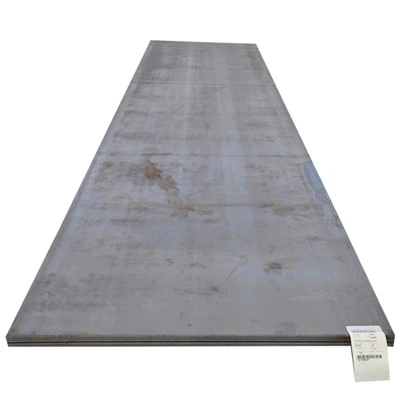
First, let’s define what we’re talking about here: semi products are intermediate, partially processed components that don’t end up as a brand’s final good, but are critical to it. Think of stamped metal brackets, extruded plastic frames, cut electrical wiring harnesses, or machined aluminum casings—if you remove or defect one of these, your final product won’t work. That’s why the first non-negotiable QC point starts before we ever touch raw materials: raw material inspection. Too many QC teams skip this step, assuming their suppliers’ materials are uniform, but I’ve seen stainless steel sheets with hidden micro-cracks that turned into structural failures a week later, and aluminum extrusion billets with inconsistent hardness that warped during our final machining. Our process here means we don’t just sign for a delivery and move it to the production floor. Every batch of metal, plastic, or composite materials gets a cross-reference with our purchase order: we verify material certifications, track lot numbers, and run a quick sample test for tensile strength, hardness, or melting point depending on the part’s end use. For electrical semi products, we even test the conductivity of small wire samples with a multimeter before they leave the receiving bay. This step catches 80% of potential issues before they even reach the production line, saving us and our clients thousands in rework down the line.
Next, process monitoring during the core manufacturing steps. Semi products aren’t made in one step; they go through cutting, shaping, stamping, molding, machining, or finishing, each with its own set of QC checks. For many newer suppliers, these checks are often treated as a “quick look” every hour, but we’ve found that consistent, in-process monitoring at every stage eliminates variability. Take our stamped metal brackets, for example. The stamping press runs 24/7 for large orders, and instead of checking just once every 60 minutes, we have our line operators pull a sample every 20 minutes. We measure dimensions with digital calipers, check for burrs that can cause wear on a client’s assembly tooling, and confirm that the bracket’s hole spacing matches their blueprint. For plastic molded semi products, we monitor the injection mold’s temperature and pressure in real time—even a 5-degree shift can cause parts to warp when they cool, a defect that’s impossible to fix after the part is removed from the mold. We also have visual inspection stations midway through machining operations, where trained operators catch things like tool wear that would create rough edges or uneven surfaces before a batch is fully processed. This isn’t just labor-intensive; it’s proactive, and it means we rarely send a batch where 10% or more of parts need rework.
One QC point that’s often overlooked for semi products is dimensional accuracy and tolerance verification. Final products rely on semi parts to fit exactly with other components, so even a 0.1mm deviation can mean a part won’t assemble correctly. Our team doesn’t just measure parts with a basic ruler; for every order, we use precision tools like coordinate measuring machines (CMMs) for complex parts, go/no-go gauges for high-volume, simple components, and optical comparators for tiny, high-precision parts like electronic connectors. We also align every measurement directly with the client’s engineering drawings—no assumptions about what “close enough” means. Last year, a client thought their blueprint allowed for a 0.5mm tolerance on a custom mounting bracket, but when we reviewed their design notes, we found they needed a tighter 0.2mm tolerance to fit with their newer assembly line. Catching that discrepancy before production saved the client from having to retool their entire line, and it taught us to build a tolerance verification step into every order’s pre-production check, not just a one-time review.
Surface finish and cosmetic quality are another often misunderstood QC point for semi products. Some suppliers think “it’s just an intermediate part, no one will see it anyway,” but that’s a mistake. Cosmetic defects like scratches, dents, or uneven coatings can lead to rejection during the client’s final inspection, and if a semi product has a finish that’s prone to corrosion, it can fail in the end product’s field, leading to returns. For our metal semi products, we check for surface burrs after machining, ensure powder coating thickness is within a specified range, and run a salt spray test on sample parts for clients that need corrosion resistance for outdoor use. For plastic parts, we check for sink marks (indentations from uneven cooling) or mold flash (excess plastic that forms around mold edges) that can interfere with assembly. We also have a dedicated visual inspection station where parts are held under neutral lighting to catch subtle defects that might be missed under harsh factory floor lights—small scratches that would otherwise go unnoticed until the client’s assembler picks up the part.
Functional testing is the final QC check before a semi product leaves our facility, and it’s non-negotiable. Depending on the part’s purpose, this might mean testing conductivity for electrical semi products, load capacity for structural brackets, or flexibility for hose or tubing components. For example, if we’re making a hydraulic hose semi product for a heavy equipment manufacturer, we test the pressure rating of every sample batch to ensure it can handle the maximum pressure required, with no leaks or bursts. For electrical harnesses, we run a continuity test to confirm each wire is connected correctly and no pins are bent. I’ve seen too many suppliers skip functional testing to save time, leading to entire batches of semi products that don’t work once assembled, forcing clients to halt their production lines. That’s why we invest in automated functional testing equipment that can check 100% of parts in a batch, not just a sample—for clients with high-volume orders, this step is the final gate before shipment.
Beyond these technical QC points, there are two unsung quality controls that keep our semi products consistent: traceability and corrective action. Traceability means every batch of semi products has a unique lot number, linked back to the raw materials used, the production shift, the machine that made them, and the inspection results. If a client reports a defect, we can pull that lot’s records in minutes, not hours, to identify the root cause. For example, a few years back, a client reported that 5% of their mounting brackets were failing. Using our traceability system, we found those bad parts all came from a single production shift where a stamping press’s alignment had shifted slightly. We fixed the press, trained the shift team, and prevented the issue from happening again—something we never could have done without clear traceability.
The other key, I think, is that quality control isn’t just a department job—it’s part of every team’s role. Our line operators don’t just run machines; they’re trained to spot anomalies, whether that’s a squeak in a stamping press that signals tool wear or a discolored plastic part that indicates bad raw material. Our QC team works hand-in-hand with our production team, not as enforcers, but as partners to fix issues as they arise. This culture means that quality checks aren’t a bottleneck in the process; they’re part of making parts right the first time.

At the end of the day, the goal of QC for semi products isn’t perfection for perfection’s sake—it’s reliability for our clients. When a client needs semi products that will fit, function, and hold up in their final product, every one of these control points works together to make that happen. If you’re a manufacturer or OEM looking for a semi products supplier that prioritizes consistent, quality parts through every step of production, I’d be happy to walk you through our process, review your specific part requirements, and show you how we can support your production goals.
Prepainted Steel Reference
American Society for Quality. (2022). Quality Control Principles for Industrial Components. ASQ Quality Press.
International Organization for Standardization. (2021). ISO 9001:2015 Quality Management Systems Requirements. ISO.
National Institute of Standards and Technology. (2020). Handbook of Manufacturing Quality Control Practices. NIST.
Address: Unit 2102, Jingjin International Center, NO.18 Hejiang Road, Heping District, Tianjin, China
E-mail: info@tjrsr.com
WebSite: https://www.tjrsr.com/
