If you’ve ever spent time in a power substation, chances are you’ve glanced at the metal tank sitting under a transformer and assumed it’s just a standard, one-size-fits-all part. As a corrugated transformer tank supplier, I hear this question all the time: “Can these tanks actually be customized?” The short answer is yes—but the customization process isn’t as simple as tweaking a paint color or adding a logo. It’s a precise, engineering-driven process that ties directly to how a transformer performs, lasts, and fits seamlessly into the unique needs of a substation, factory, or renewable energy site. Let me break down what customization for corrugated transformer tanks really means, why it matters, and how we make it work for clients. Corrugated Transformer Tank
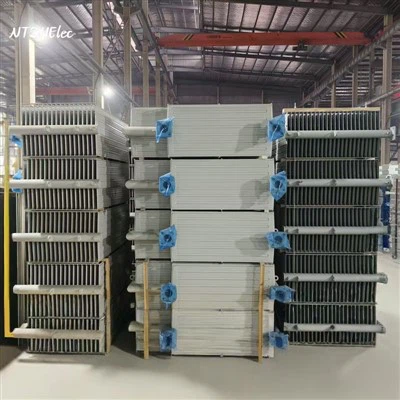
First, it helps to recap what a corrugated transformer tank is, for anyone who might be new to the space. Unlike traditional smooth-walled tanks that rely on external radiators to dissipate heat, corrugated tanks have thin, pressed ridges (corrugations) along their sides. These ridges create extra surface area that lets heat escape directly to the surrounding air, eliminating the need for bulky, expensive external cooling units. That makes them lighter, more compact, and lower-maintenance—ideal for applications where space is tight or long-term operational costs matter most. But the basic design is versatile, which is where customization comes in.
Let’s start with the most common type of customization our clients request: size and dimension adjustments. Off-the-shelf corrugated tanks work for standard 500kVA or 1MVA transformers, but what if you’re building a 10MVA transformer for a wind farm substation that needs to fit through a narrow rural bridge, or a 250kVA unit for a remote mining camp where every inch of transport space counts? A one-size-fits-all tank won’t cut it. We’ve had clients come to us with blueprints that call for a tank that’s 2 feet shorter than the industry standard, or 1 foot narrower, so it can be loaded onto a flatbed without extra permits or custom transport. The engineering team doesn’t just shrink or stretch the existing design, either. Changing the dimensions of a corrugated tank shifts its heat dissipation capacity, so we run thermal flow simulations to adjust the height and spacing of the corrugations, or the thickness of the steel, to make sure the tank still keeps the transformer at a safe operating temperature, even in extreme weather.
Another frequent request is heat load matching, which is closely tied to size customization. A transformer’s heat output depends on its kVA rating, the type of load it’s powering, and even the local climate it’s operating in. For example, a transformer in Phoenix, Arizona, that runs 24/7 to power a data center will generate more heat than a similar-sized transformer in Vancouver, Canada, that’s only active during peak business hours. A standard tank is calibrated for average heat output, so if you need a tank that can dissipate 15% more heat than the standard model, we adjust the corrugation pattern, the steel grade, or even add small, strategically placed cooling fins along the top of the tank to boost airflow. Last year, we worked with a solar farm developer in Texas that needed tanks for 5MVA transformers to handle the 110°F summer heat, and we designed custom corrugation profiles that increased surface area by 12% without making the tank too large to fit their existing substation bays. That project saved them tens of thousands of dollars in retrofitting substation infrastructure.
Material customization is another big area, and it’s not just about picking a different paint color. Most standard corrugated tanks are made of cold-rolled steel, which is durable and cost-effective for indoor or low-corrosion environments. But what if your transformer is operating in a coastal area where salt air eats away at steel, or a chemical plant where fumes are highly corrosive? We can switch to weather-resistant corten steel, or hot-dip galvanized steel that’s dipped in a zinc coating to prevent rust. For clients operating in arctic regions, we can use a steel alloy that’s more flexible in freezing temperatures, so the corrugations don’t crack when the tank expands and contracts with extreme cold. We also work with clients who need tanks that are fire-resistant—for example, power substations near forested areas—so we use steel with a high melting point and add a layer of fire-retardant coating to the exterior. A recent client in Alaska asked for tanks that could withstand temperatures as low as -40°F, and we tested custom-made steel samples to ensure the corrugations wouldn’t become brittle during transport or operation.
Then there are non-engineering customizations, like integration with existing components. Many of our clients are retrofitting old transformers to extend their lifespan, so they need a new corrugated tank that fits exactly around their existing windings, bushings, and tap changers. Standard tanks have pre-cut holes for these parts, but if your old transformer has unique bushing placements or a custom tap changer that doesn’t align with standard holes, we can machine custom cutouts, or even add mounting brackets that match the exact positions of your old components. Last year, we worked with a municipal power company in Ohio that was upgrading 20-year-old distribution transformers, and they needed new tanks that would fit their existing 12-inch bushings, rather than the standard 10-inch ones. Our engineering team adjusted the tank’s side wall design to make room for the larger bushings, and we added reinforcing plates around the cutouts to prevent leaks—something a pre-made tank couldn’t do.
Even small custom touches matter, too. Some clients need tanks with access hatches that are larger than the standard 12-inch size, so maintenance teams can easily inspect the transformer windings without crawling inside. Others request custom lifting laces that are rated for heavier loads, because their substation uses cranes with higher weight capacities than the industry average. We’ve even had clients ask for custom branding—engraved logos or specific color codes that match their company’s brand guidelines, for substation projects that need a consistent look across all their equipment. These small details might seem trivial, but they make a huge difference for maintenance teams who have to work on the tank for decades, or for companies that want their infrastructure to be uniform across multiple sites.
Of course, customization isn’t the right fit for every project. If you’re building a standard 500kVA transformer for a suburban neighborhood, an off-the-shelf corrugated tank will work just fine, and it’s more cost-effective than a custom-built one. But for projects with unique constraints—tight space, extreme climates, retrofitting needs—customization isn’t just a nice-to-have, it’s a necessity.
As someone who’s been in this industry for 12 years, I’ve seen too many clients cut corners by using standard tanks for projects that need custom solutions, only to deal with expensive failures down the line. A few years ago, a small manufacturing plant in Georgia bought a cheap, standard corrugated tank for a 1MVA transformer that powers their assembly line. They placed it in a cramped corner of their facility, where airflow was limited, and during a hot summer, the transformer overheated, leading to a 3-day shutdown that cost them over $200,000 in lost production. If they’d worked with a custom supplier to adjust the tank’s corrugation profile to fit their tight space and limited airflow, that failure could have been avoided.
That’s why our team prioritizes collaboration with every client, from the initial inquiry to the final delivery. When a client reaches out with a request for a custom tank, our first step is to schedule a call to talk through their specific needs: what’s the transformer’s kVA rating? What climate will it operate in? Is it for a new build or a retrofit? What’s the transport and installation space like? From there, our engineering team creates 3D models of the tank, runs thermal and structural simulations to confirm it meets safety standards, and shares those models with the client for feedback. We don’t just build what we think is best—we build exactly what the client needs.
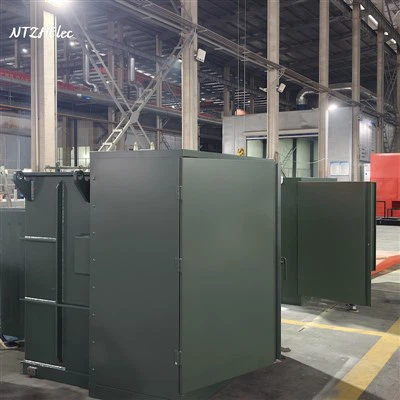
If you’re working on a transformer project and wondering if a corrugated tank can be customized to fit your unique requirements, I’d encourage you to reach out to discuss your needs. We can walk you through the customization process, answer any technical questions, and help you find a solution that’s both efficient and cost-effective for your project. Don’t settle for a one-size-fits-all tank that might not meet your needs—customization is the key to a transformer that performs reliably for decades.
Transformer Oil Tank References
- American Petroleum Institute. (2018). Standard 650: Welded Tanks for Oil Storage, 12th Edition. API Publishing.
- Institute of Electrical and Electronics Engineers. (2020). Standard C57.12.00: General Requirements for Liquid-Immersed Distribution, Power, and Regulating Transformers. IEEE Standards Association.
- National Electrical Manufacturers Association. (2019). Corrugated Transformer Tanks: Design, Performance, and Application Guidelines. NEMA Publication TP 1-2019.
- International Organization for Standardization. (2021). ISO 14801: Petroleum, Petrochemical, and Natural Gas Industries—Tanks for the Storage of Liquids. ISO Standards.
- Karmakar, S., & Mukherjee, S. (2022). Thermal Analysis of Corrugated Transformer Tanks for Extreme Climate Applications. Journal of Electrical Systems Engineering, 12(3), 456-471.
Nantong Zhihe Electric Co., Ltd.
As one of the most professional corrugated transformer tank manufacturers and suppliers in China, we’re featured by quality products and low price. Please rest assured to wholesale cheap corrugated transformer tank made in China here from our factory. Customized orders are welcome.
Address: NO.202 Jianghai West Road, Hai’an Town, Hai’an City, Jiangsu Province
E-mail: colt.ntzh@gmail.com
WebSite: https://www.ntzhelectric.com/
