If you’ve ever got a custom metal part for a machine, a car, or even a household appliance that fits perfectly every single time, there’s a good chance a PLC made that happen. As the owner of a CNC turning service shop, I get asked all the time—what’s the big deal about PLCs anyway? Why can’t we just run CNC turning machines without one? Let me break this down like I would when I’m walking a new customer through our process, no boring engineering jargon that makes your eyes cross. CNC Turning Services
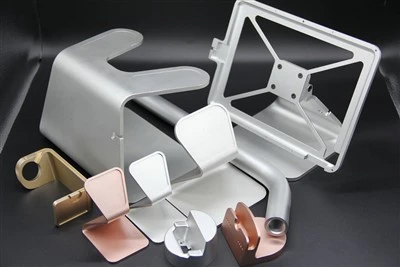
First, let’s start with the basics if you’re not deep in this world. CNC turning is where you take a solid block of metal (aluminum, steel, brass—whatever you need), spin it at super high speeds, and press a cutting tool against it to carve out whatever shape you want. Think bolts, shafts, custom bushings, even weirdly shaped custom parts for a vintage tractor repair. Back in the day, people used manual lathes—you had to crank handles, watch the cutting tool, adjust speeds by hand, and it was easy to mess up. One wrong move, and you ruined an entire $500 block of steel. That’s where PLCs changed the game entirely.
A PLC, short for Programmable Logic Controller, is basically the brain that makes CNC turning machines work reliably, repeatedly, and exactly how you program them. It’s not like a regular computer you use to check emails, though—these are built for dirty, loud, messy factory floors. They can handle extreme heat, vibration, and dust way better than your laptop ever could. That’s a big reason they’re the standard for every CNC turning service worth their salt.
Now, let’s get into the actual role they play for us as a CNC turning service, because that’s what matters to you—our customer, who needs parts that are on spec, on time, and don’t cost you a fortune to fix when they’re wrong. First up: consistent precision. When we get an order for, say, 1,000 custom aluminum bushings for a medical device, every single one has to be within 0.001 inches of the next. That’s way tighter than a human can hold, even if you’ve been turning lathes for 30 years. The PLC is the one that runs the show here. It reads the CNC code we input (like G-code, but I’ll keep that simple) and tells the lathe exactly how fast to spin the metal, where to move the cutting tool, when to stop, when to apply coolant, even when to eject the finished part. No two parts are identical by accident—they’re identical because the PLC is executing the same commands over and over, without getting tired, distracted, or making a tiny human error that adds up across 1,000 pieces. I’ve seen other shops skip the right PLC setup and end up with batches where half the parts are off by a hair—then they have to scrap half the order, and you end up waiting twice as long for your parts. We never have that problem because our PLCs are calibrated and programmed to stick to specs, no exceptions.
Next, process automation and efficiency. If we had to do every single step manually, we’d need way more people, way more time, and way higher prices for your parts. The PLC connects to every part of the CNC turning cell: the lathe itself, the coolant pumps, the part feeders, even the door on the machine. For high-volume orders, we can set the PLC to load a new metal bar, spin it, cut the part, check its dimensions with a tiny probe, and send it to a bin—all without anyone standing over the machine. A single operator can run 3-4 machines at once now, instead of just one, which keeps our costs down and passes that savings on to you. Let me give you a real example: last month, we got an order for 5,000 brass pins for a plumbing company. Without the PLC, that would’ve taken 2 operators 2 full days to do. With the PLC, we set up the code, loaded the raw material, and walked away. The PLC ran the entire shift, we checked parts every hour, and we finished the order in 12 hours. That’s not just fast—that’s reliable, and it means you got your parts when you needed them to keep your own assembly line moving.
Safety is another huge one, and it’s not something we cut corners on. When you’re spinning metal at 3,000 RPM and using a cutting tool that’s sharp enough to slice through paper like butter, you need strict safety rules. The PLC is our enforcer here. It’s programmed to make sure the machine door is locked before it starts spinning the metal—you can’t open the door while the lathe is running, no matter what. If the coolant level gets too low, the PLC will automatically shut the machine down to avoid damaging the cutting tool or starting a fire. If the part probe finds a defect, it’ll stop the machine and alert us, so we don’t keep cutting bad parts. I’ve seen a few small CNC turning shops get in trouble because they skip integrating PLC safety features, either to save money or because they don’t know how to set them up correctly. That’s a risk for their workers, and a risk for your parts—if the machine doesn’t shut down when it’s supposed to, you could get a shipment of bad parts, or worse, someone could get hurt. Our PLC safety protocols are non-negotiable, because your order and our team’s safety matter just as much.
Then there’s flexibility—people always think CNC turning is only for big batches, but we do a lot of small custom orders too, like 10 or 20 parts for a startup building a new product prototype. The PLC lets us switch between jobs super fast, no need to reconfigure a bunch of manual settings every time. When a customer comes to us with a custom shaft for a small engine prototype, we just upload the new G-code to the PLC, test the first part, adjust if needed, and we’re running the new job in 10 minutes instead of an hour. If we didn’t have a PLC, each new job would require rewiring the lathe, adjusting all the dials by hand, and that’s where mistakes happen. We’ve had startups come to us after bad experiences with other shops that take 2 weeks to turnaround prototype parts, because they couldn’t adjust their setup fast enough. With our PLCs, we can get prototype parts out in 3-5 days, which is critical for them to test their product and get to market.
Wait, let’s talk about troubleshooting too—because when a machine has a problem, you need to figure it out fast, not waste hours guessing what’s wrong. Modern PLCs have built-in diagnostics that tell us exactly what’s off. If the cutting tool isn’t moving to the right spot, the PLC will flag an error code on the control panel: maybe it’s a loose wire, or the tool holder is dirty, or the programming has a typo. A few years back, we had a machine that kept producing parts with a slight angle on the end. Instead of taking it apart piece by piece, the PLC’s diagnostic screen told us the tool axis was misaligned by 0.002 inches. We fixed it in 10 minutes, and got the order back on track. Without the PLC, we would’ve spent an afternoon guessing, and delayed the customer’s order. That’s a huge benefit for you—less downtime means your parts are on time.
Now, I know some of you might be thinking—can’t we use a regular computer to run the CNC instead of a PLC? That’s a fair question, and I’ve seen shops try that, especially smaller ones. But here’s the thing: regular computers crash. They get malware, their software updates break things, they can’t handle the constant vibration and heat of a shop floor. A PLC is built specifically for this environment. It’s designed to run 24/7, 365 days a year if needed, without crashing. I’ve had our PLCs run nonstop for 3 months straight for a big order, and the only time they stopped was when we needed to change the cutting tool. A regular computer would’ve crashed at least a dozen times in that span. That reliability is non-negotiable for a CNC turning service, because when a customer is counting on you, you can’t have a random computer crash hold up their order.
Let me wrap this up so it makes sense for you, not just the tech stuff. When you work with a CNC turning service, you’re not just paying for a metal lathe. You’re paying for the system that makes sure your parts are perfect, on time, and don’t cost you extra because of mistakes or downtime. The PLC is the backbone of that system. It’s why we can give you consistent precision, automate jobs to keep costs low, keep our team safe, switch between custom orders fast, and troubleshoot problems before they delay your order.
At the end of the day, I started this shop because I hate when customers have to wait for bad parts, or pay more because a shop cut corners on their equipment and processes. Our PLCs are a big part of how we avoid that. If you’re looking for a CNC turning service for a prototype, a small batch, or a big high-volume order, we can walk you through every step, explain the process in plain English, and give you parts that fit exactly what you need. Whether you’re a small startup or a big manufacturing company, we have the setup to get your parts right, on time, and at a fair price. Reach out to us to talk through your next project, no pressure, just honest answers about how we can help.
CNC Milling Services References
- Bolton, W. Programmable Logic Controllers: A Practical Approach. Newnes, 2015.
- “CNC Turning Basics and Applications.” Manufacturing Engineering, Society of Manufacturing Engineers, 2022.
- “Industrial Automation Safety Standards for PLC Systems.” Occupational Safety and Health Administration, 2021.
- “Precision Machining: The Role of PLCs in Modern Turning Operations.” Modern Machine Shop, 2023.
Shenzhen Multi-Wins Precision Technology Co., Ltd.
As one of the most professional CNC turning manufacturers and suppliers in China, we have world-leading production equipment and strong manufacturing capabilities. Please feel free to buy customized CNC turning made in China here from our factory. Also, quotation is available.
Address: 1 Phase, Yi’an City Central Garden, Longfei Avenue, Longgang District, Shenzhen, GD, China. 518100
E-mail: info@multi-wins.com
WebSite: https://www.multi-wins.com/
