Yo, folks! I’m a supplier of slide tables and linear modules, and I get this question a lot: "How do I pick the right encoder for my linear module?" It’s a real head – scratcher, but trust me, by the end of this blog, you’ll have a better idea of what to look for. Slide Table and Linear Module
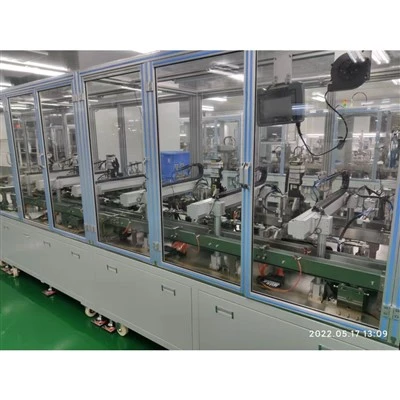
First things first, let’s talk about what an encoder does. An encoder is like a little detective for your linear module. It’s there to tell you exactly where the module is positioned at any given time. It’ll convert the linear motion of your module into electrical signals, and these signals get sent to a controller. The controller can then use this info to keep everything running smoothly.
Now, when you’re in the market for an encoder for your linear module, the first thing you gotta think about is accuracy. Accuracy is super important because it determines how close your linear module gets to the exact position you want it to be.
If you’re working on a project that needs super – precise movements, like in the semiconductor manufacturing industry, you’ll want an encoder with high accuracy. High – accuracy encoders can measure position changes down to the micrometer level. These little guys use more advanced technology, like optical encoding. They shine light through a pattern on a scale, and the way the light changes as the scale moves is used to figure out the position. But here’s the deal: high – accuracy encoders are usually more expensive. So, if your project doesn’t need that crazy level of precision, you can go for something a bit less accurate and save some cash.
Another factor to consider is the resolution of the encoder. Resolution is all about how fine – grained the encoder’s measurements are. It’s measured in pulses per unit of distance. For example, if you have an encoder with a resolution of 1000 pulses per millimeter, it can detect smaller changes in position compared to an encoder with a resolution of 100 pulses per millimeter.
A high – resolution encoder can give you more detailed information about the position of your linear module. This is great if you’re doing tasks like fine – tuning the position of a cutting tool in a CNC machine. But just like with accuracy, high – resolution encoders can cost more and might also require more processing power from your controller to handle all that data.
Speed is also a biggie. The encoder you choose needs to be able to keep up with the speed of your linear module. If your linear module moves really fast, you need an encoder that can read and process the position data quickly. Otherwise, the controller won’t get up – to – date information about the module’s position, which can lead to errors.
There are two main types of speed considerations here. The first is the maximum speed of the encoder itself. Some encoders are designed to work at very high speeds, while others are better suited for slower applications. The second is the update rate. The update rate tells you how often the encoder sends new position data to the controller. A higher update rate means the controller gets more frequent updates, which is crucial for high – speed applications.
Now, let’s chat about the environment your linear module and encoder will be operating in. If your setup is in a clean, dry environment, you have a wider range of encoder options. But if it’s in a harsh environment, things get a bit trickier.
For example, if there’s a lot of dust or debris around, you might want an encoder that’s sealed well. Encoders with IP (Ingress Protection) ratings can be a good choice. An IP rating tells you how well the encoder is protected against solids and liquids. For instance, an encoder with an IP67 rating is dust – tight and can withstand being submerged in water for a short period.
If the environment is prone to vibration or shock, you’ll need an encoder that can handle it. Some encoders are designed with rugged construction to resist the effects of vibration and shock. This ensures that the encoder continues to work accurately even when the linear module is being jostled around.
The type of output interface the encoder has is another key point. Different controllers can accept different types of signals from the encoder. The most common output interfaces are analog and digital.
Analog interfaces output a continuous voltage or current signal that varies according to the position of the linear module. These interfaces are relatively simple, but they can be more susceptible to noise. Digital interfaces, on the other hand, send discrete signals in the form of pulses or binary codes. They’re generally more resistant to noise and can provide more accurate data.
Before you buy an encoder, make sure it has an output interface that’s compatible with your controller. If you’re not sure, you can always consult the controller’s manual or reach out to the manufacturer.
Cost is always a factor, right? You gotta find a balance between getting an encoder that meets your needs and staying within your budget. As I mentioned earlier, high – accuracy and high – resolution encoders usually cost more. But sometimes, it’s worth spending a bit extra if it means getting better performance for your project.
You can also look at the long – term costs. For example, some encoders might be cheaper upfront but require more maintenance or replacement parts over time. Make sure to consider these factors when comparing different encoder options.
Let’s talk about compatibility with your linear module. The encoder needs to be physically compatible with your linear module. This means it should fit properly in terms of size and mounting. You don’t want to end up with an encoder that’s too big or doesn’t fit the mounting holes on your linear module.
There are different mounting options available for encoders, such as flange mounts, foot mounts, and shaft mounts. Make sure to choose the mounting option that’s suitable for your specific linear module design.
Additionally, the encoder’s measuring range should match the travel range of your linear module. If your linear module has a long travel distance, you’ll need an encoder that can measure that full range accurately.
Now, I’ve covered a whole bunch of stuff here, and I know it can seem overwhelming. But don’t worry! If you’re still not sure which encoder is right for your linear module, feel free to reach out. We’re here to help you make the right choice.
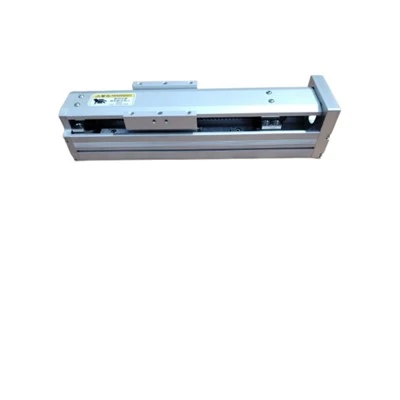
If you’re thinking about purchasing an encoder or have any other questions regarding slide tables and linear modules, don’t hesitate to connect with us. We’re happy to discuss your specific requirements and find the best solutions for your projects.
Slide Table and Linear Module References:
- Motion Control Handbook: A guide to selecting and using motion control components
- Encoder Manufacturer Catalogs: Various catalogs from leading encoder manufacturers that provide technical specifications and application notes.
Yangning (Xiamen) Intelligent Technology Co., Ltd.
With abundant experience, we are one of the most professional slide table and linear module manufacturers in China. As we have world-leading production equipment and strong manufacturing capabilities, we warmly welcome you to buy bulk advanced slide table and linear module from our factory. Customized orders are welcome.
Address: Room 307-2, No. 15 Duiying Road, Software Park Phase III, Torch Hi-Tech Zone, Xiamen, Fujian, China
E-mail: mia@ynautos.com
WebSite: https://www.ynautos.com/
